

Swiss-Type CNC Machining Buyer's Guide: How to Choose a Precision Parts Supplier in China
Swiss-Type CNC Machining Buyer's Guide: How to Choose a Precision Parts Supplier in China
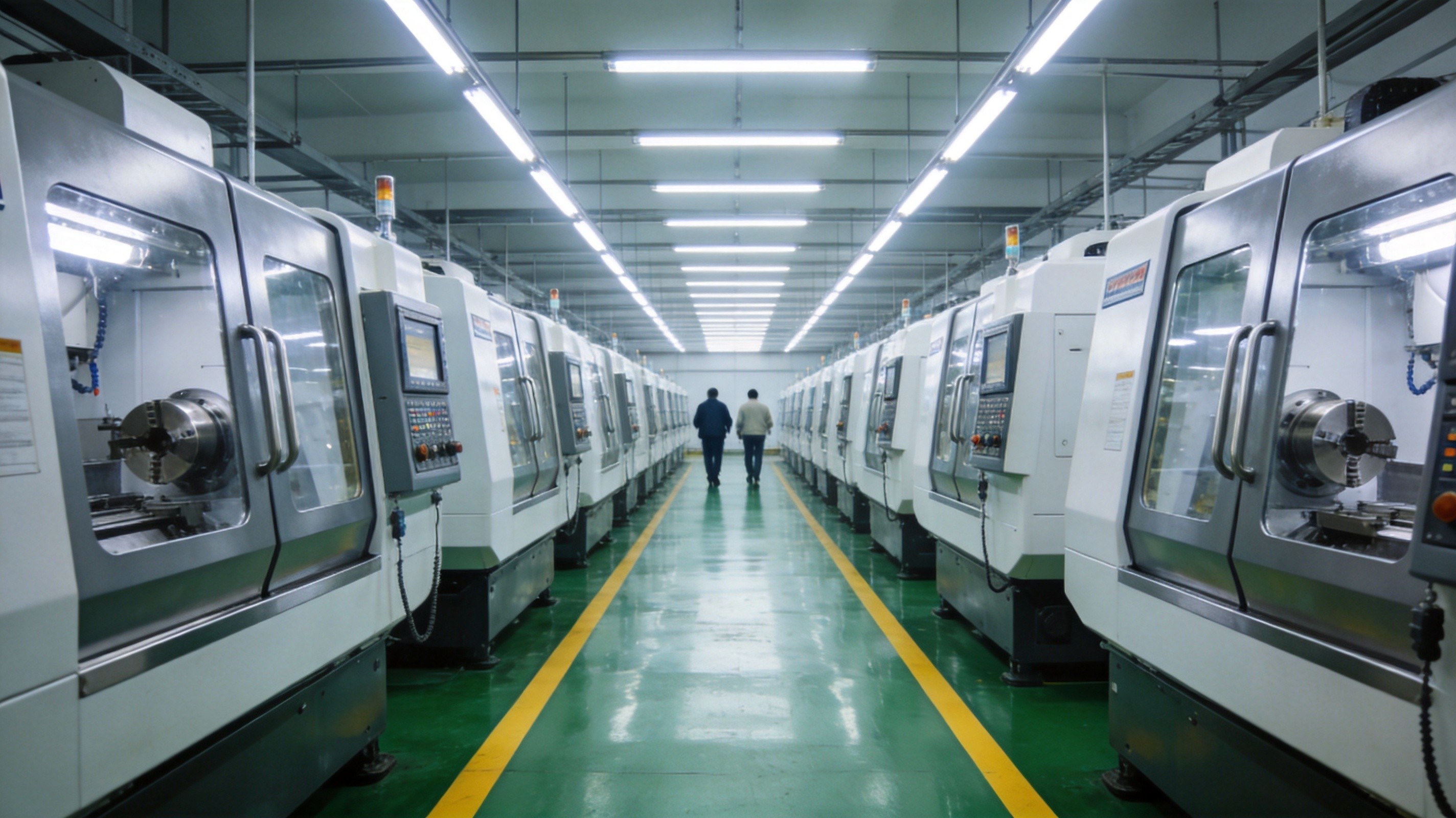
Sourcing precision turned components from China is no longer a cost decision alone. For engineers and procurement managers in automotive, medical, telecom and industrial automation, the real question is whether a supplier can hold micron-level tolerances across a million-piece production run — and prove it with documentation.
This guide explains what Swiss-type CNC machining actually is, what separates a capable supplier from a merely cheap one, and the specific questions to ask before you place a production order.
1. What Swiss-Type CNC Machining Is — and Why It Matters for Small Parts
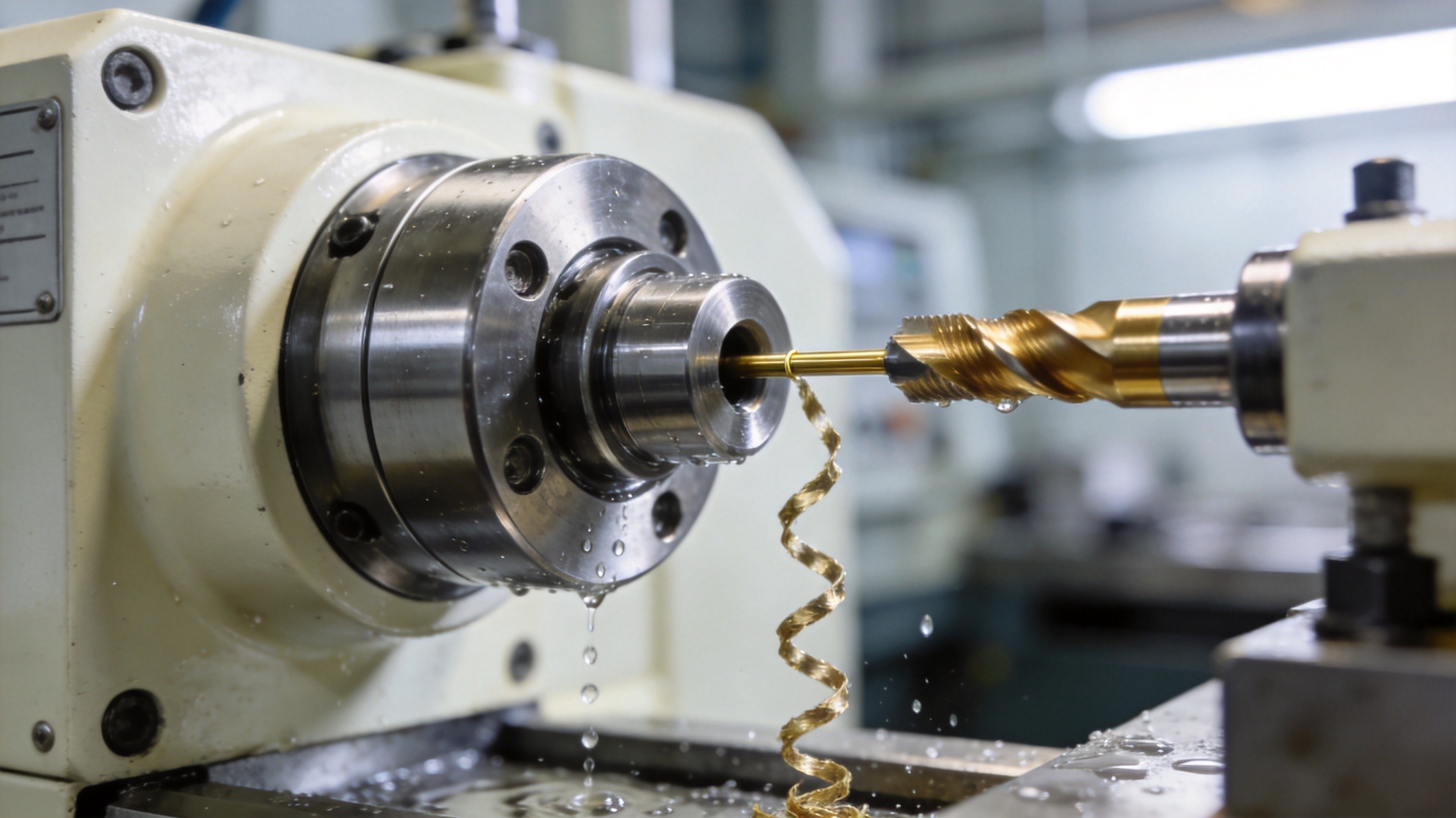
A Swiss-type CNC lathe (also called a sliding-head lathe) feeds bar stock axially through a guide bushing, with cutting tools positioned immediately at the bushing exit. Because the workpiece is supported within a few millimetres of the cutting edge, deflection is minimal even on parts with extreme length-to-diameter ratios.
That single mechanical difference explains why Swiss-type machining dominates the production of:
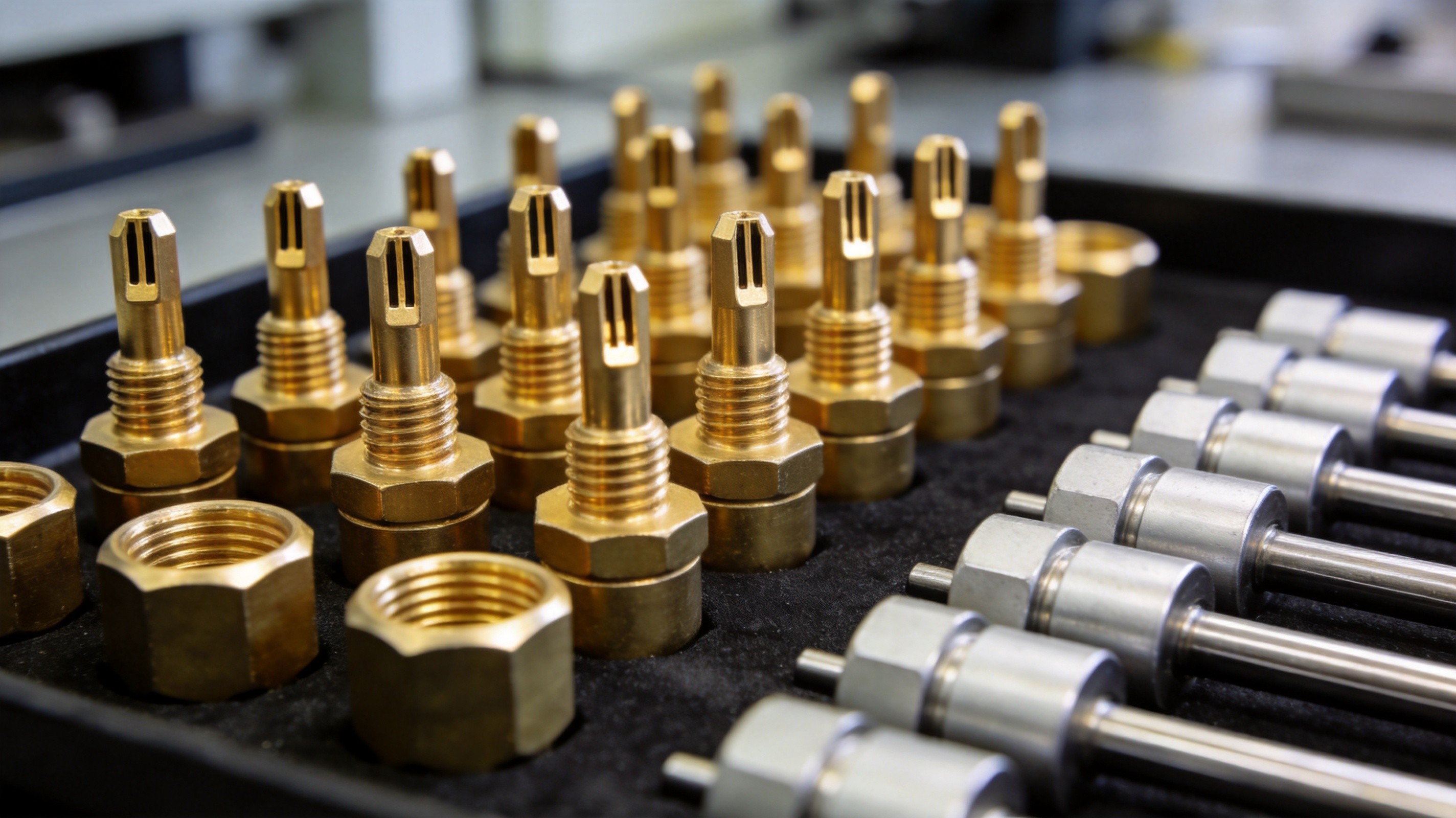
- Connector pins and terminals (0.5–3 mm diameter)
- Slender shafts and guide pins
- Brass and stainless steel inserts, sleeves and bushings
- Miniature sensor housings and RF connector bodies
On a conventional fixed-head lathe, the same part would chatter, bend, or require secondary operations. On a Swiss-type machine, it is produced in a single setup — often with turning, milling, drilling, slotting and thread whirling completed before the part is cut off.
What this means for buyers: if your drawing specifies a diameter under roughly 6 mm, a length-to-diameter ratio above 5:1, or tolerances tighter than ±0.01 mm, Swiss-type machining is usually the correct process — and asking a supplier "do you run Swiss-type or fixed-head?" is a fast way to filter out mismatched quotations.
2. The Seven Things to Verify in a Supplier
2.1 Machine inventory, not just machine count
Ask for the machine list: brand, model, axis configuration and year. Imported Swiss-type lathes from Citizen, Tsugami and Star remain the benchmark for thermal stability and repeatability. A supplier running 60+ imported machines across multiple brands can match the machine to the part rather than forcing every job onto one platform.
2.2 Guide bushing discipline
This is the detail that separates real Swiss-type shops from those that simply own the machines. Guide bushing clearance must be matched to bar stock material, diameter and straightness. Too loose and the part chatters; too tight and the bar surface is scored. Ask how the supplier selects and maintains guide bushings for brass versus stainless steel — a vague answer is a warning sign.
2.3 In-process measurement capability
A supplier that inspects only at the end of the run cannot control a process. Look for: first-article inspection (FAI) on every setup change, in-process SPC on critical dimensions, and optical or CMM verification with documented GR&R. Ask what the actual Cpk is on a comparable part — not whether they "can achieve" 1.33, but what they last measured.
2.4 Tool life management
In high-volume turning, a worn tool produces out-of-tolerance parts long before anyone notices by eye. Mature suppliers log tool changes by piece count, not by operator judgement, and hold records that can be tied to specific production lots.
2.5 Certification scope — read the certificate, not the logo
IATF16949 is the entry ticket for automotive supply chains. But check three things: (a) is the certificate currently valid, (b) does its scope explicitly cover precision machining or CNC turning, and (c) can it be verified in the IATF certification database. ISO 9001 alone is a general quality system and does not carry the automotive-specific requirements (APQP, PPAP, PFMEA, SPC, MSA) that Tier 1 and Tier 2 customers demand.
2.6 Traceability depth
Pick a finished part at random and ask: which heat number was the bar stock, which machine produced it, who inspected it, and which tool batch was installed? A supplier with real traceability answers within minutes. A supplier with paper-only systems will defer the question.
2.7 Communication and engineering response
Send a drawing with one ambiguous feature and observe the response. A strong supplier returns a DFM note within a day — flagging a tolerance that is unnecessarily tight, a feature that would be cheaper as a secondary operation, or a material substitution that would improve machinability. A weak supplier quotes the drawing as written and discovers the problem at first article.
3. Cost, MOQ and Lead Time: What Actually Drives the Number
Three variables dominate the quoted price of a Swiss-type turned part:
Cycle time. Because Swiss machines complete multiple features per cycle, price is driven by seconds per part, not by material volume. A part with a cross-hole and a slot may take 25 seconds; the same part without them, 12 seconds.
Material. Brass machines fast and is forgiving. 303 stainless is straightforward; 316 and 17-4 PH are slower and harder on tooling. Titanium and exotic alloys move the price decisively.
Tolerance and inspection burden. A ±0.05 mm part with sampling inspection and a ±0.005 mm part with 100% optical sorting are different products, even from the same machine.
On minimum order quantity: for established suppliers, MOQ is usually governed by setup economics rather than a fixed policy. A few thousand pieces is a common starting point for a simple part; complex parts or uncommon materials may justify a higher first order. Prototype and sample runs are normally available and should be treated as a technical validation step, not a formality.
Typical timelines from a capable Chinese supplier: samples in days for straightforward parts, PPAP documentation in 2–6 weeks depending on complexity, and production lead times of two to four weeks for repeat orders.
4. Red Flags Worth Taking Seriously
- Quotes that ignore your tolerance callouts. If the quotation does not reference the critical dimensions, the supplier has not read the drawing.
- No first-article report on a new part. FAI is not optional in regulated industries.
- "We can do anything" positioning. Suppliers with genuine capability usually decline work outside their process window.
- Certificates that cannot be verified. A scanned certificate image is not verification.
- No documented corrective-action process. Ask for a redacted 8D report from a past issue. Suppliers without one have either never had a problem (unlikely) or never investigated one (worse).
5. Why the Yangtze River Delta Cluster Matters
Kunshan, Suzhou, Shanghai and the surrounding Yangtze River Delta region host one of the densest precision manufacturing clusters in the world. For overseas buyers, the practical benefits are:
- Supplier depth. Tooling, surface treatment, heat treatment and metrology subcontractors are within an hour's drive, which shortens qualification cycles.
- Logistics. Parts reach Shanghai ports the same day; air freight from Pudong or Hongqiao is routine.
- Engineering talent. The region's machine shop ecosystem produces experienced programmers and process engineers, which shows up in DFM quality and problem-solving speed.
- Audit accessibility. A cluster supplier is straightforward to visit, audit and qualify — important for automotive and medical programs.
6. Frequently Asked Questions
Q: What tolerance can Swiss-type CNC machining realistically hold?
A: On a well-maintained machine with proper guide bushing setup, ±0.005 mm on critical diameters is achievable and routinely held in production for parts under about 10 mm. Tolerances tighter than that generally require a conversation about measurement capability and cost, not just machining capability.
Q: What is a typical MOQ for custom turned parts from China?
A: MOQ is usually driven by setup cost rather than policy. Simple brass or stainless parts commonly start in the low thousands. Complex geometries, uncommon materials or tight inspection requirements may justify a higher first order. Sample quantities are normally available for validation.
Q: How do I verify an IATF16949 certificate?
A: Request the certificate number and issuing body (for example TÜV, SGS or BV), confirm the validity date, check that the scope covers precision machining or CNC turning, and verify the certificate in the IATF global certification database. Do not rely on a scanned image alone.
Q: How long does PPAP take for a new turned part?
A: Typically two to six weeks depending on part complexity. A complete submission includes dimensional results, material certifications, initial process studies with Cpk, control plan, process flow diagram and PFMEA. A supplier who cannot describe this sequence clearly has not done it often.
Q: Is a Chinese supplier suitable for automotive or medical programs?
A: Yes, provided the supplier holds the relevant system certification (IATF16949 for automotive), can demonstrate process capability with data, and supports customer audits. The limiting factor is rarely geography — it is whether the supplier's quality system is genuinely operating rather than documented.
7. About Tudasyn
Kunshan Tudasyn Electronic Technology Co., Ltd. is a precision machining manufacturer established in 1998, with nearly 30 years of experience in Swiss-type CNC turning. The company operates more than 60 imported Swiss-type lathes from Citizen, Tsugami and Star, with a daily capacity of up to 500,000 pieces, and holds both IATF16949 and ISO9001 certification.
Tudasyn produces connector pins, brass nuts and sleeves, aluminum bushings, slender shafts and custom non-standard turned components for customers in automotive, medical, aerospace, 5G communications, new energy and 3C electronics. Capabilities include turn-mill integration, dual-spindle synchronized machining and micron-level tolerance control, supported by in-process SPC, first-article inspection and full lot traceability.
For buyers evaluating a Swiss-type machining partner, Tudasyn offers sample validation and DFM feedback on drawings before production commitment.
Website: www.tudasyn.com
This article was prepared by the Tudasyn technical team. Reproduction permitted with attribution.

